In April 1958 a group of pupils from our School, St Stithians College, went on a camp to Caledonspoort in the Eastern Free State. We were under the supervision of some of the teachers, Steyn Krige, Derick Hudson-Reed and David (Daffy) Dent, and also the headmaster’s nephew, Louis Kernick.
We had been there the previous year, and had stayed at Wyndford Guest Farm, on the banks of the Caledon River. On the other side of the river was Lesotho, then more commonly known to outsiders as Basutoland. In those days one did not need a passport to cross the border, and there was a single gate in charge of a single customs official on the Lesotho side, and nothing on the South African side.
In 1958, however, some of us were going on a pony trek up the Maluti Mountains to see the Ox Bow Lake on the Malibamatso River — that was the educational part of the trip, as we learned about ox-bow lakes in geography lessons.
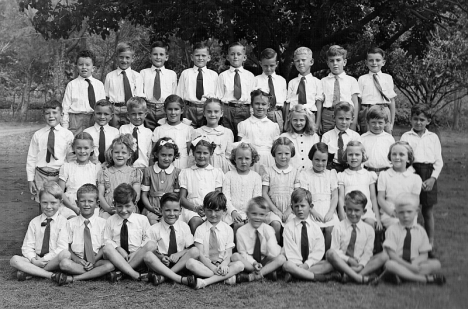
As it was 60 years since it happened, I wrote to remind the only classmate of that time I am still in touch with, Mike Nayler, of our journey, and he sent me some of his recollections of it. So I decided to compile some extracts from my diary to send to him with some of my photos, and my wife Val suggested that I would put them into a blog post, in case anyone else might be interested. And for what it’s worth, we’re planning a reunion of the Class of 58, so if anyone who was in that class sees this, please get in touch.
Diary Extracts
The summaries in italics are mostly taken from what I wrote in an appointment diary on the trip. The longer bits I wrote in a bigger book after getting home.
14-Apr-1958, Monday
Left on the train for school camp at Wyndford guest farm
In the evening we went to the school camp at Wyndford again. David Curtis and I went in the same compartment, with Nayler and Lundie.
15-Apr-1958, Tuesday
Arrive at Wyndford, climb the mountain behind it, sleep under the stars.
We travelled through the night, stopping at every milk can, [1] and changed trains at Bethlehem in the morning, and arrived at Wyndford guest farm just before lunch, travelling the last six miles fron Fouriesburg station in the back of a lorry.[2]
After lunch David Curtis and I climbed the mountain behind the hotel, and took photographs there. There was no room in the inn for those of us who were going up the mountains, so we had to sleep under the stars, which we studied through David’s telescope, while lying in bed. Great balls of fire! [3]
16-Apr-1958, Wednesday
Choose horses for our ride into the mountains
In the morning we crossed over the Caledon Bridge with several others, and went up into the village, and for some time watched a guy chopping up stone to build a wall with.

Watching a stone mason at work. Derick Hudson-Reed on the left
Then a guy called Lif brought a horse for Mark Rushton, and he got on to ride it. Derick Hudson-Reed took Mark’s camera, and took a photo of him on the horse, the first time he had ever ridden one. He rode off, and I also took a photo of him as he went down the way we had come, with a little black foal trotting along behind.

Mark Rushton’s first ride on a horse
Then the rest of us went down the side of the hill, and across a stream running through a donga, where some women were washing clothes.

Old man drinking beer
On the other hill, near the school, we talked to an old man who was sitting outside his house drinking beer, but he didn’t know much English and we knew even less SeSotho, so it was rather corny conversation. In the afternoon the horses arrived for our ride into the mountains. I chose a little black stallion who looked a bit like Tom. I had fourth choice and everyone thought I was nuts for choosing such a little pony. I didn’t know his name, so I called him “Pony”. In the afternoon I rode him and led him around so I could get to know him. Most of the others chose big horses.
17-Apr-1958, Thursday
Set out on our mountain ride, from Caledonspoort to Butha Buthe, and then north through the foothills of the Malutis. Camp at a crossroads.
Amid frantic preparations for our ride we eventually managed to get everything packed and set out, but had scarcely gone a mile when Terry Ryan’s saddlebags came adrift.
We took about two-and-a-half hours to cover the six miles to Butha Buthe, and had lunch at the district commissioner’s house. The lunch consisted of cannonballs made from “weeds” — a Basotho dish. Derick Hudson-Reed and a few others were crazy enough to try swiming in the swiming bath there. They stripped naked and jumped in, and then yelled as they froze.

Leaving Butha Buthe. Derick Hudson-Reed on right, in Mosotho hat. Steve Hayes in centre, looking back.
After lunch we rode through Butha Buthe, and turned north-east along a winding dusty road, which reminded me of Ingogo a bit. On our right was the Maluti range towering above us, and we rode along the foothills till we should come to the pass which would take us over the Maluti to the Ox-Bow Lake, where we were to stay as guests of Mr Read, who was doing a hydrological survey there.
After a while we straggled out in a long line, and my pony, with his short legs, was near the back of it. Some blokes would try an occasional gallop to get up to the front, and then their saddle bags would fall off and they would have to go back to retrieve their scattered belongings. The sun got lower and its rays got redder, and still we hadn’t nearly reached the place where we were supposed to spend the night. The hills became steeper and we started winding down into a valley, and then crossing rivers and then climbing out again.
At sunset we stopped at a bleak and desolate crossroads, where there was a deserted road-builders’ camp, and there we spent the night. There was a village nearby, where we could get water from the well, the local headman having given us permission. David Curtis and I slept together, and I put my own halter on Pony, and tied him to a concrete block, which we used as a windbreak. I gave Pony some mealies, and we got into our sleeping bags. Pony ate his mealies, dropping a good many over me. Then we went to sleep, and so did Pony, but not for long. At about midnight I woke up with his nose on my face, and he was snuffling around trying to reach the loose mealie pips he had dropped. I smacked his nose and went back to sleep. About an hour later I felt my saddle (Brassie’s, actually) jerking under my head. I was using it as a pillow. Pony had discovered that I had a loaf of bread under it, and grabbed it, and then trotted off to the end of his rope and began to eat it. I hauled him in on the rope, and grabbed what was left of the bread out of his mouth, and tried to get back to sleep.
18-Apr-1958, Friday
Ride up the Malutis to the Ox Bow Lake over the mule track, to stay with Dick Read of the hydrological survey
When the sun came up, David and I had a great greasy breakfast of fried eggs and bacon, while the others had bread. Some had had eggs, but they had broken on yesterday’s journey. We had taken the precaution of wrapping ours in newspapers, and so had cause to gloat, until we tried to wash our dishes.
After breakfast we continued on our way, and in the morning rode straight towards the mountains instead of along them. We rode up the Caledon River, or one of its tributaries, and it looked very different now from the dirty brown stream that formed the Free State border. It was icy cold and crystal clear. At one place we stopped to let the horses drink, and three exceedingly brave souls, Terry Ryan, Tom Sutcliffe and Peter Wood, tried to swim. Needless to say, they froze.

Brave souls swimming in the icy mountain water
We came to a notice which said “Ox Bow jeep track. Vehicles enter at their own risk” and started to climb. We crossed some hills covered with very green grass, and Mr Read met us there, riding an enormous horse. He had a big bushy beard, and out of his shorts came sunburnt legs which looked like tree trunks. He was quite a guy, and wore a slouch bush hat. A little while later a pack mule met us and took our bedding, and then we started to climb the steep pass up to the top. Now I rode with Dick Read in front of the line as we climbed the steep mule track, which was shorter than the jeep track. Pony with his short legs had better stamina for mountain climbing, and left the others far behind. The track crossed numerous streams, with bushes going up the slopes on either side, where only goats were grazing. The hills rose up and up in tumbled profusion, like an enormous green wave 5000 feet above the rest of the ocean, frozen in the moment of breaking.

The Maluti mountains looking like a breaking wave
We stopped on a flat rocky ledge near the top of the pass to let the others catch up, and there was a steady stream of sweat running off Pony’s belly.

Pony, at the top of the pass.
Most of the others were leading their horses now, and only Dick Read and I remained mounted.

Riding up the jeep track
Just before sunset we rode over the top, 9000 feet above sea level, and the scene suddenly changed. On the other side of the mountain, instead of coarse bushes, there was short springy turf, with hundreds of streams all over the hillside. There were hills, and beyond them more hills as far as we could see. Just behind the escarpment was a river, running south-west, parallel to the range, and this was called the Malibamatso.

View from the top, looking back over the way we had come
Two miles further, and we arrived at Dick Read’s house. When I got there, still ahead of the others, Pony had stopped sweating completely, and was not even damp under the saddle.
19-Apr-1958, Saturday
At the Ox Bow Lake in Basutoland, listening to Dick Read telling stories.
We slept in a half-built rondavel, which was Mr Read’s new house. His old one had one room and was too small. Early in the morning I climbed the mountain behind his house, and then after breakfast Dick Read took us to the Ox Bow Lake, and explained that a dam would be built there for hydroelectric power. He talked about the future of Basutoland while we were sitting there on the hillside. It seemed a wonderful country, and it seemed a pity if it were to become incorporated in the Union. Dick Read said its economic future wouldn’t be very bright unless it did join the Union.

The ox bow — the river had originally run around the hill in the centre, but then wore a new course behind it, leaving the old course as an isolated ox bow.
Then, after messing around all day, we gathered around Dick Read at five o’clock, and talked. There seemed to be no subject on which he could not talk. He talked about the basis of astrology — mutations in the newly born caused by cosmic radiation.

Dick Read, hydrologist
He told us of a woman at university who was not easily frightened, “So,” he said, “some bloody fool from the medical school got an arm and put it in her bed one night. They waited outside about half an hour after she went in, expecting to hear screams. When nothing happened they eventually opened the door, and found her sitting in a corner gibbering and gnawing at the arm.” He talked about other things too — diamonds in the Basutoland rivers, philosophy, God, time, space, and the prophecies of Nostradamus, the formation of different races, geography and geology. We had a break for coffee at 8:00, then went on discussing, but mainly listening and questioning, until late at night.
20-Apr-1958, Sunday
At the Ox Bow lake in Basutoland, taking photos
I walked up to the pass with David Curtis, and we took photographs. In the evening Dick Read and David Scott both had colds, so they sat around drinking Drambuie and eucalyptus oil. Scott seemed to think the eucalyptus oil was terrible, but I tried it and it wasn’t too bad.
21-Apr-1958, Monday
Return to Wyndford from Ox Bow, riding through the night in the last part.
We set out on the return journey to Wyndford, and were all sorry to leave Dick Read and the mountains. We travelled the 14 miles to the bottom of the pass, and then some of us were going much slower than the others.

Going back down the mountain
About 10 of us decided that we would go to Wyndford today, while those with tired horses or stiff legs were going to camp the night on the road. So at 1:00 pm we parted from the rest, and took a short cut over the veld to above Butha Buthe, which was a long way round anyway.
When night fell we had left the road, and it was overcast and pitch dark. A couple of lightning flashes and thunder rumbles made us think it would rain. On we went, in single file, across open veld and through many fields, down dongas and up the other side, hardly able to see the guy in front, but the horses knew how to follow. Leading the column was Sello, a Mosotho guide. Once or twice he stopped, and said he had taken the wrong way, but how he knew that in the pitch dark we never knew. He would then change direction, and in the middle of that trackless wilderness assert that we were on the right track.
The 10 schoolboys following him were rather subdued, and even awed, by this night journey on horseback. Suddenly we came onto the Butha Buthe road about a mile from Wyndford, and realising that we knew where we were again, started chattering. On the open road we began to trot. Tubby Ewing, saddlesore, groaned with every step his horse took, and every ten steps would say “Fuck you man! Ow Ow! Fuck you, you lousy animal!”
The customs post was deserted at that time, but we opened the gate and went through, and cantered the last hundred yards up to the hotel singing “Come to Wyndford”, words someone had invented and put to the tune of “Clementine”. Daffy was giving a sermon to those who had remained behind, but never finished it. Everyone rushed out to greet us, and though it was 9:00 pm Mrs Boswell, the hotel keeper, got us a meal. While I ate Mark Rushton stood next to me, wearing an enormous red and black blanket that covered him completely. He said he had bought it with some money an aunt had given to him.
22-Apr-1958, Tuesday
The rest of the mob arrived back at lunch time, David Curtis among them. We agreed it was the best holiday we had ever had.
23-Apr-1958, Wednesday
Hitchhike to Butha Buthe to post letters.
David Curtis and I hitched a lift to Butha Buthe on the back of a truck. I bought some rope, and posted some letters and postcards. On the way back we got a lift with Robert Boswell, the landlord’s son. We had a braaivleis party in the evening, and Robert spat petrol out of his mouth and lit it.
24-Apr-1958, Thursday
Played netball against a local girls school
In the afternoon we had a netball match against the village school over the border. Being girls, they hammered us sadly in the first match, but we got the idea of the game then, and beat them by a narrow margin in the two following games. Then they sang songs for us, and we sang songs for them. Louis and Daffy had us laughing when they sang the duet from “Iolanthe”.
25-Apr-1958, Friday
Left Wyndford, got the 11:00 am train from Fouriesburg, which got to Bloemfontein at sunset.
We left Wyndford, very sadly, and got the 11:00 am train to Bloemfontein. We played Monopoly most of the way over the flat Free State veld, and then went looking round Bloemfontein for an hour while waiting for a train to take our coaches to Johannesburg. That train had a dining saloon, so Lundie and I went and had a big grill at 10:00 pm
26-Apr-1958, Saturday
On the train from Bloemfontein to Johannesburg
I had bought a newspaper in Bloemfontein, The Friend, and read the reports of the election results, in which the Nats had won with an increased majority, and the leader of the United Party, Sir de Villiers Graaff, said it wasn’t too serious — 15 years in the life of a country was like a short burst of hysteria in an invidivual.
Notes and references
[1] The train went from Johannesburg to Bethlehem overnight, on a line that no longer exists, as on our last couple of road trips that way we had observed that the rails had all been pulled up. At Bethlehem it was joined to a train from Durban, and crawled on a steep incline out of the town. We got off at Fouriesburg, where a truck was waiting to take us the 12 miles to Wyndford, at Caledonspoort on the Basutoland border. Fouriesburg station was six miles from the town, and from there it was another six miles to Caledonspoort, with its cylindrical sandstone cliffs.
[2] The distance was actually 12 miles – six from the station to Fouriesburg, and another six miles to Wyndford, which was at Caledonspoort.
[3] The song Great balls of fire! By Jerry Lee Lewis was currently popular.
Filed under: holidays, travel | Tagged: Lesotho, Maluti Mountains, pony trekking, school camp, St Stithians College | 2 Comments »






 Hayes & Greene family history